

January 29, 2026
By: Janina Glass
Imagine you had a child (perhaps you do), and imagine that during every day of life with that child, you thought of them the way many people in our modern society think about their partners: constantly agonizing over whether to keep them around or let them go.
“Is this really my soulmate child?” you might wonder. “Or is there someone else out there for me?”
Even in your imagination you can see how wildly off-base that would be. No good parent raises a child with such a conditional mindset. We understand intuitively that children are a work-in-progress; that heartache, frustration and difficulty are simply part of the experience. We commit anyway, hoping we can develop the necessary patience as we engage in the parenting process.
If we know what commitment looks like, why has an indecisive attitude become the norm in so many other areas of our lives?
Mindset Matters
Those of us in developed nations live in a culture optimized for choice, customization, and exit. That mindset works well enough for products, but poorly for people. When there are ever-increasing options, it becomes tempting to hold back full investment; just in case something better comes along. Yet research on decision-making suggests that too many choices don’t lead to greater satisfaction at all—they often leave us anxious and regretful. When we’re always evaluating whether we should leave, we rarely experience what it’s even like to truly stay.
Staying with something is what makes us truly good at it, though. Psychologists like Carol Dweck and Angela Duckworth have shown that long-term success—in school, work, and life—depends less on innate talent than it does on perseverance, resilience, and the belief that growth is possible over time. All these traits presuppose commitment. You cannot develop grit in something you are always halfway prepared to abandon. Humans develop through friction, not in spite of it.
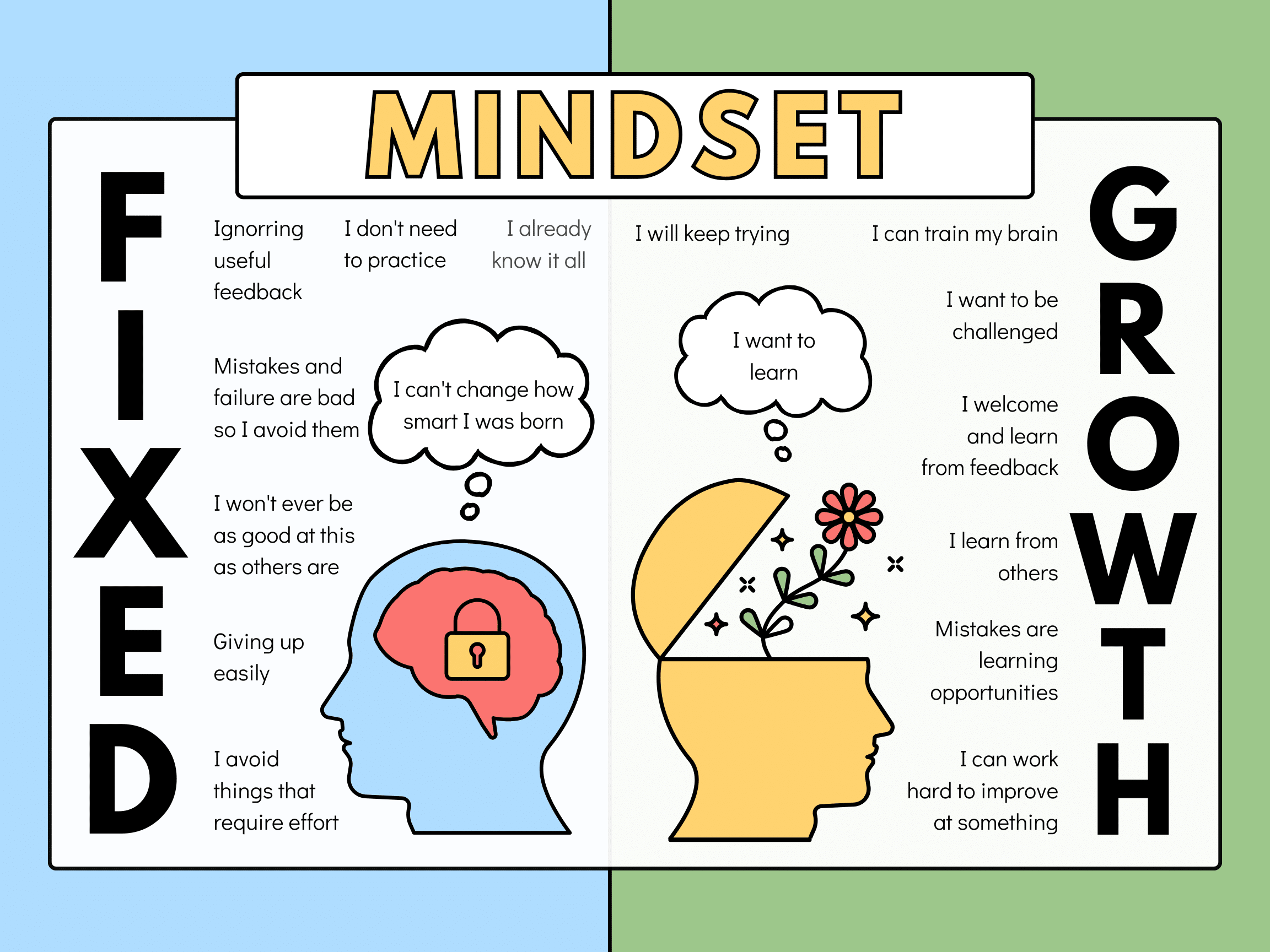
My children started learning about growth mindset in elementary school. The school has posters encouraging children not to give up on themselves, with phrases like, “I’m not good at this…yet.”
When Commitment is Tested
Decades of relationship research also point in this direction. John Gottman’s work on marriage and parenting suggests that thriving long-term relationships are not those which never engage in conflict. Successful relationships are attained when people repeatedly choose repair, responsibility, and engagement instead of withdrawal. If leaving becomes our reflex rather than our last resort, we shouldn’t be surprised when fewer people develop the grit needed to stay—anywhere. This principle becomes especially visible when commitment is tested.
In the United Kingdom, abortion law allows termination well into pregnancy, and even later when a child is diagnosed with a disability. One woman shared her experience of being repeatedly offered, late in pregnancy, to abort her son after doctors discovered he would likely be born with Down syndrome. In a series of interviews, she described them recommending abortion—not as a neutral option, but as a form of rescue from what professionals foretold would be a miserable and difficult life for them both. In the UK, the overwhelming majority of pregnancies involving a prenatal diagnosis of chromosomal differences or birth “defects” end in abortion. This is a reality that has prompted disability advocates to ask how counseling practices and cultural assumptions shape what is supposed to be a “choice.” The woman in the story chose to continue on with her pregnancy in spite of the diagnosis, but many women facing similar pressures do not.
When Commitment is Conditional
Regardless of one’s moral or political views, stories like this raise an important question: what happens when commitment becomes conditional, be it based on ease, health, or predicted quality of life? This is not about bad people. It’s about noticing that a consumer mindset is systematically reshaping how we approach relationships, responsibility, and even life itself.
Across cultures, commitment shows up in different forms. In societies where arranged marriages are common, the expectation is not that relationships will be effortless, but some strain is natural and growth is possible. Commitment comes first; development follows. This doesn’t guarantee happiness, but a growth mindset is the soil necessary for love, responsibility, and dignity to take root. In my next article, I’ll discuss how we in western society choose our mates, and why it frequently leads to disappointing results.
Of course, commitment does not mean staying miserable forever. Abuse, coercion, and harm are not “growth opportunities.” Not every relationship ought to be endured, but difficulty alone is not the same thing as danger. Confusing the two can lead us away from situations that might otherwise have been transformative. Commitment shouldn’t act like a trap—it should create a foundation that’s solid enough to grow on.
When Commitment is Meaningful
Whether we are talking about marriage, religious freedom, caring for vulnerable children, or the dignity of human life itself, commitment is the quiet assumption beneath every value we hold dear here at United Families International. The choice to act is always yours, and hopefully you choose to commit to life, liberty and love. Next time you’re faced with a decision, perhaps the right question to ask is not whether making a commitment is costly (it always has been), but whether anything meaningful ever grows without commitment.

Janina is an artist, writer, and the proud mother of five children through birth and adoption. She and her husband of 26 years live in Iowa, where family life and creative work go hand in hand. Through blogging, coaching, parenting, and painting, Janina is passionate about fostering empathy and hope – believing these qualities have the power to bring healing and understanding to families and communities.