
July 21, 2026
By: Christal Taggart
When my son Ian was born, I had many of the same hopes and dreams for his future that most parents have for their children. At the moment I had no idea of the years we would spend in speech therapy, working with tutors, attending Individualized Education Program (IEP) meetings, and helping him overcome the challenges of his disabilities. Two eye surgeries to straighten his eyes also became part of our lives.
Although I had other children, Ian’s needs required more of my time. Thankfully, no one seemed to feel slighted, and helping Ian became part of our family life. By the time he reached his teenage years, someone on the outside looking in would never know how much work had gone into helping him get there. His progress reflected not only his own determination, but also the efforts of our family and the many people who supported him along the way.
After years of worry, disappointment, hard work, and eventual triumphs, I truly believed we were going to make it. Then, one winter night, black ice changed everything. No amount of therapy, planning, work, or love could have prepared our family for Ian’s death. From that night forward, we have never been quite the same.
For a long time, I assumed coping meant somehow finding our way back to normal. Eventually, I learned a phrase that helped me understand what our family was experiencing: a new normal.
Although no two families experience hardship in the same way, every family eventually faces circumstances it did not expect or choose.
Some experience the death of someone they love, while others face illness, disability, financial hardship, natural disasters, broken relationships, or other events that permanently alter the course of family life. Some hardships eventually pass, while others divide life into a before and an after.
At that point, an important question emerges: When returning to the life we had before is no longer possible, what does it mean to move forward?
Resilience Means Adapting
Fortunately, research on family resilience offers a more helpful way to understand that question. We often describe resilient people as those who “bounce back” after adversity. Yet families are not rubber bands that return to their original shape after being stretched. Some experiences permanently change who we are. Family resilience is not necessarily a return to what was, but the process of adapting to what is while continuing to find meaning, maintain relationships, and build a life together.
Rather than viewing resilience as a trait possessed only by unusually strong families, Walsh (2016) describes it as an ongoing process of adapting to adversity. Families often reorganize roles, draw upon shared beliefs, communicate differently, and discover new ways to remain connected as circumstances change.
Walsh’s family resilience framework emphasizes making meaning of adversity, maintaining hope, remaining flexible, and drawing upon relationships and resources beyond the immediate household. In other words, resilience is not pretending that loss does not hurt. It is finding ways to carry on within a reality that has transformed.
Adapting Together and Individually
When Ian died, my husband and I lost the same son, but we did not experience that loss in the same way. My husband later described the years following Ian’s death as walking through a fog. I coped differently. For years, I quietly repeated the same mantra to myself: Ian is on a mission. Our children also had their own relationships with Ian and their own ways of grieving his absence.
Although families experience hardship together, each person experiences it in his or her own way. Masten and Monn (2015) explain that resilience works in both directions. Individuals influence the health of the family, and the family influences how well each individual adapts.
Understanding this may relieve families of the expectation that everyone should grieve, cope, or recover in the same way. One family member may need to talk, while another needs time and quiet. Some may find comfort in familiar routines, while others may need changes in responsibilities or expectations. The goal is not identical responses, but enough communication, flexibility, and understanding to remain connected as family members learn to navigate unexpected circumstances together.
Finding Stability In Everyday Life
After Ian died, I lived one ordinary day at a time. Dishes still needed washing. Laundry still needed folding. Five of our children still lived at home, and life resumed making demands even when I felt incapable of meeting them.
Looking back, those ordinary tasks did not heal my grief; they simply helped me move forward, one day at a time. In many ways, those small, familiar routines became anchors during a season when so much of life felt uncertain.
Crespo (2025) identifies security and identity as the foundations of meaningful family rituals and connects them with family cohesion and a sense of belonging. These familiar routines remind family members that, even when circumstances have changed, they still belong to one another.
Beyond the routines of daily life, families also draw strength from relationships with others. During difficult seasons, support may come from extended family, friends, neighbors, and faith communities, who remind us that we do not have to carry every burden alone. Supportive relationships help individuals and families become more resilient during times of adversity (Suttie, 2017).
Walsh (2016) likewise emphasizes that communication, family organization, and supportive relationships strengthen a family’s ability to adapt. Accepting support from others is not a sign of weakness but an important part of adapting to a changed reality.
Accepting Change While Honoring The Past
Over time, families develop new patterns. Responsibilities shift, relationships change, and life gradually fills spaces that once felt unbearably empty. Yet moving forward does not require forgetting the people, dreams, and expectations left behind.
This is why the phrase new normal can be so helpful. It does not promise a return to the life we once knew, nor does it require us to describe every change as growth. Families may become stronger in some ways and more vulnerable in others. They may discover new capacities while still carrying wounds.
Resilience, then, may be less about returning to who a family once was and more about learning to remain connected, adapt to new circumstances, and continue creating a meaningful life together (Walsh, 2016).
For years, Ian’s empty chair at our kitchen table seemed like a constant reminder of his absence. The empty space was impossible to ignore. Today, grandchildren sometimes sit in that chair. They have not replaced him, nor have they erased the place he continues to hold in our family. But over the years, we have added more chairs around the table as our family has grown.
Perhaps that is what creating a new normal looks like. We carry with us the people we have loved and the experiences that have changed us while still making room for what comes next. Moving forward does not erase what came before. Sometimes resilience simply means learning to live fully in the life that remains.
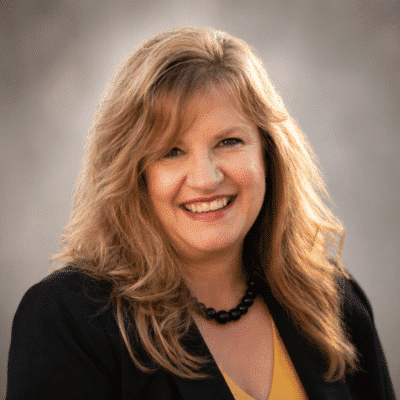
Christal is a senior at BYU–Idaho, graduating in July 2026 with a Bachelor’s degree in Marriage and Family Studies with an emphasis in parent education. She also holds an Associate’s degree in Family History Research, reflecting her strong commitment to family across generations. Christal is passionate about strengthening and preserving the family and is excited to support United Families International’s mission through her internship. She is a wife, mother of seven, and grandmother of nine, and finds her greatest joy in spending time with her family, gardening, traveling, and laughing.