

What happens when voters approve a constitutional amendment without fully understanding its consequences? Missouri offers a sobering example. Just two years after voters narrowly approved a constitutional right to abortion, the state is confronting the far-reaching legal and policy implications of that decision. Now, with abortion-related measures on the ballot in four states this November 3rd, the decisions voters make could have consequences extending far beyond Election Day.
At United Families International, we are not simply watching these developments unfold. We are actively engaged in these critical efforts, particularly in Idaho and Missouri, where our advocates and interns are working to educate citizens, raise awareness, and encourage informed participation on ballot measures in their state. As the photos below illustrate, defending these principles requires more than recognizing the challenges—it requires showing up and taking action. This week’s article examines what Missouri’s experience reveals and why voters in other states should pay close attention.
Faithfully for Families,
Wendy Wixom
President, United Families International


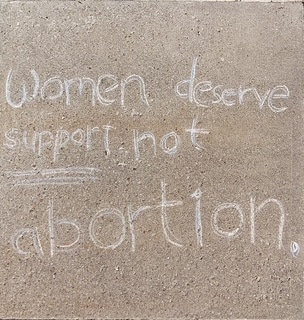
UFI interns literally took the pro-life message to the streets in Idaho, helping raise awareness about the importance of protecting life and understanding the consequences of proposed ballot measures.
Four States, One Critical Choice: The Battle Over Abortion on November 3
Alexis Tarkalson
Several states in the U.S. face a similar question regarding abortion: Should a citizen have a right to abortion? The answer that Idaho, Nevada, Virginia, and Missouri give on November 3rd is vital.
As a resident of Missouri, it was my special interest to become informed about what exactly was being voted on. Taking an in depth look at my home state will give a peek into what the other three states will face should they pass pro-choice legislation.
The citizens of Missouri have another chance to decide on the highly-controversial question of abortion. In 2024, Missouri enshrined “reproductive freedom” as a constitutional right. Amendment 3 seeks to overturn that addition to the constitution.
Misinformation and disinformation are being shared at a rapid rate, shrouding the proposed Amendment 3 in confusion.
Let’s clear some of the more pernicious claims I have seen circulating regarding Amendment 3.
Amendment 3 could better reflect what the people want
In 2024, Missouri voters approved Amendment 3 by a narrow margin, with approximately 51.6% voting in favor of “reproductive freedom”.
This was not a landslide win for abortion advocates, because it was barely a win at all. Due to this narrow margin, as Republican Senator Adam Schnelting put it, “Overnight, Missouri went from being one of the most pro-life states in the Union to being one of the most radical abortion states, not just in America, but in the world.” Putting this issue back on the ballot gives Missourians another chance to decide, definitively, where their values lie regarding life.
Amendment 3, as outlined by its sponsor, Representative Ed Lewis, promises to:
- [Guarantee] women’s medical care for emergencies, ectopic pregnancies, and miscarriages;
- Ensure women’s safety during abortions;
- Ensure parental consent for minors;
- Repeal Article 1, section 36, approved in 2024; allow abortions for medical emergencies, fetal anomalies, rape, and incest; and
- Prohibit sex-change procedures for minors
Amendment 3 will restore what was lost
This amendment is not a total ban on abortion, no matter what you might hear otherwise. It is a limit on abortion. Abortion remains available for medical emergencies, fetal anomalies, rape, and incest.
What has happened in the two years since the right to “reproductive freedom” was made constitutional? In June 2026, a Jackson County Circuit Court permanently blocked numerous abortion restrictions, concluding that they conflicted with the reproductive-freedom amendment approved by voters in 2024. Here is a concise list of only some of the things no longer enforced:
- Down syndrome abortion bans
- Abortion-reporting to the state
- Mandatory hospital relationships for abortion providers
- Mandatory medication-abortion plan should complications arise
- Abortion-specific informed consent to ensure a patient considering abortion understood what she was undertaking
- A 72-hour waiting period after receiving abortion information materials
- A second physician to corroborate that an abortion was necessary post fetal viability
- Criminalization/prosecution/penalization for the outcomes of abortion procedures, even if damages are sustained
- Abortion facility requirements such as: requiring a state license to operate, facility inspections, and facility standards
- A telemedicine ban
This limited list is crucial for residents of Nevada, Idaho, and Virginia to see. From the moment abortion was constitutionally recognized in Missouri, courts, legislatures and pro-abortion special interests pecked at pro-life statutes until little else remained.
Ironically, what was touted as an amendment that would better prioritize the health of women, in reality does the opposite. This happens through a woman’s inability to seek restitution should she sustain damages from the abortion procedure, or through the fact that abortion facilities are no longer up to standard. It seems that Missouri’s current amendment, and by proxy Nevada, Virginia, and Idaho’s, will benefit no one in particular.
Amendment 3 will better protect minors
For some, it may come as a surprise that attached to this amendment are restrictions on gender-affirming care for minors. But upon closer inspection, the connection is not so much of a stretch. Under the current “reproductive freedom” amendment, we read,
“The Government shall not deny or infringe upon a person’s fundamental right to reproductive freedom, which is the right to make and carry out decisions about all matters relating to reproductive health care including but not limited to childbirth, postpartum care, birth control, abortion care, miscarriage care, and respectful birthing conditions.” (Emphasis added)
Representative Lewis explained to me, “The word ‘person’ includes adults and children and the words ‘all matters relating to’ as well as the words ‘including but not limited to’ are what can serve as a pretext to challenge a ban on sex change procedures and would allow transition procedures for minors even without a parents’ knowledge.” This is no red herring, but a red flag for Missourians.
When this amendment was first proposed, the opposition immediately attacked with a filed suit accusing, among other things, that the proposed amendment violated the “single-subject rule”. This rule requires legislation to address only one subject so voters are not forced to accept a measure they oppose in order to pass one they support. Opponents strongly argued that combining reproductive health care with restrictions on gender-transition procedures violated Missouri’s single-subject rule.
The courts did not agree. The appeals court opinion said, “Because gender transition surgeries or hormone therapies may affect the ability to reproduce, gender transition surgeries and hormone therapies may be connected with, or incident to, reproductive health care.”
You might think such a provision in the amendment is unnecessary since Missouri already prohibits gender affirming care for minors.
Senator Schnelting explained, “In 2027, the law banning gender transition surgeries for kids expires which means that hormone and puberty blockers will again be available and pushed on kids. These chemicals have very harmful effects on kids. A majority of Missourians agree that these dangerous procedures should not be available to children.”
Idaho faces a similar situation, as its ballot question, Prop 1, includes much of the same language as Missouri’s 2024 Amendment 3.
Use your right to vote PRO-LIFE
As the law currently stands in Missouri, women are not protected, their unborn children are not valued, and minors will soon be vulnerable once again to the irreversible effects of gender affirming care. Representative Lewis states this amendment “restores common sense” and Senator Schnelting explains, “Missouri has never been so uniquely positioned. We are responsible for determining whether Missouri will be a pro-life state for decades to come.”
In Nevada, Idaho, and Virginia, they are voting to put themselves in Missouri’s place. Through convoluted language that says one thing but legally could mean something entirely different, the pro-choice message is advancing. If you are lukewarm on the issue or uncertain about the questions coming at you on the ballot, understand that a sweeping pro-choice initiative is not the answer.
New legislation can be drafted that will protect women’s health without giving unborn children the short end of the stick. It is possible.
Use your right as a citizen to become informed on Amendment 3 (Missouri), Prop 1 (Idaho), Question 1 (Virginia), or Question 6 (Nevada) by reading them in their entirety and studying where your state’s legislation currently stands on this issue. Then, on November 3rd, exercise your right to vote—and vote to restore meaningful protections for unborn children, women and minors.
To read Amendment 3 (Missouri) click here.
To read Question 6 (Nevada) click here.
To read Question 1 (Virginia) click here.
To read Prop 1 (Idaho) click here.
The Charlotte Lozier Institute provides a detailed analysis of each state’s ballot questions, How To Vote In Idaho_20261028_181904_0000and I highly encourage reading it. Click here to read.
 Alexis Tarkalson graduated from Brigham Young University-Idaho with her degree in Political Science and an emphasis in American Government. She loves spending time with her husband and two children, reading, hiking mountains, and learning new hobbies. The family unit is immensely important to her, as is protecting the associated rights, which is why she volunteers her time towards United Families International.