

July 2, 2026
Christal Taggart
When my son ran for public office for the first time, our family quickly discovered that campaigns involve more than speeches and signs. They require candidates to explain their ideas, answer criticism, and persuade people who may strongly disagree. Watching him campaign reminded me that disagreement is not a weakness of democracy. It is one of its defining characteristics.
As America celebrates its 250th anniversary, it is worth remembering that freedom of speech is one of the fundamental liberties that make self-government possible. The Founders recognized that citizens in a free society would not always think alike. Rather than requiring uniformity of thought, they protected the freedom to speak, write, assemble, and petition the government. The First Amendment reflects their belief that liberty and self-government depend upon the free exchange of ideas.
A Foundation Of Self- Government
The First Amendment protects freedom of religion, freedom of speech, freedom of the press, the right of the people to assemble peaceably, and the right to petition the government (Legal Information Institute, n.d.). The Founders did not include these protections by accident. They understood that self-government depends upon citizens who are free to worship, think, speak, publish, gather, and appeal to their leaders.
James Madison, often called the “Father of the Constitution,” viewed freedom of conscience and freedom of the press as essential safeguards of liberty. He believed that individuals must be free to form their own beliefs and communicate them openly. In a self-governing society, citizens cannot make informed decisions if they cannot discuss public issues, exchange ideas, criticize government actions, or advocate for change. Madison described freedom of communication among the people as “the only effectual guardian of every other right.” For Madison, the free exchange of ideas was not merely a personal liberty; it was one of the primary protections against tyranny.
Unlike monarchies, where power rests with a king or ruling elite, the American system places ultimate authority in the hands of the people. Self-government requires citizens who are free to speak openly and hold their leaders accountable. Freedom of speech, therefore, is not merely an individual right; it is one of the foundations upon which self-government rests.
The Founders Expected Disagreement
The Founders understood that free people would not always agree. James Madison recognized that disagreement is part of human nature. People naturally view the world through the lens of their own experiences, which inevitably shape their views on religion, politics, and public policy.
Rather than attempting to eliminate disagreement, the Founders sought to create a system capable of managing it peacefully. Disagreement, therefore, is not necessarily a sign that something has gone wrong. It is often evidence that people are free to think, speak, and act according to their own consciences.
Ultimately, the challenge in a free society is not eliminating differences but learning how to engage one another respectfully. Freedom of speech protects not only popular opinions but also unpopular ones. Indeed, the true test of our commitment to free speech often comes when we encounter ideas with which we strongly disagree.
Freedom Of Speech And Truth
Freedom of speech serves another vital function: it helps societies seek truth. Human beings are imperfect, and individuals, communities, and governments can all make mistakes. Open discussion allows citizens to question assumptions, challenge ideas, and refine their understanding. Although disagreement can sometimes be uncomfortable, the exchange of ideas often leads to greater understanding and wiser decisions.
Throughout American history, freedom of speech has allowed citizens to advocate for change. Abolitionists spoke against slavery, suffragists argued for women’s voting rights, and civil rights leaders challenged racial discrimination. Although many of these voices were unpopular at the time, the free exchange of ideas helped Americans reconsider long-held beliefs and ultimately contributed to a more just society.
Rights And Responsibilities
The Founders understood that liberty requires both rights and responsibilities. Freedom of speech gives citizens the right to express their views, but it also invites them to use that freedom wisely. A free society depends not only upon constitutional protections, but also upon citizens who exercise good judgment and consider the well-being of others.
Civil discourse does not require agreement. It does require respect. Citizens in a free society should seek to speak truthfully, listen carefully, and treat others with dignity, even when disagreements are deep.
These habits do not develop automatically. People must learn how to engage respectfully with others, especially when opinions differ. Families are often the first place where children learn the habits necessary for self-government. Around dinner tables and in everyday conversations, parents teach children how to express their opinions respectfully and engage thoughtfully with differing ideas. Discussing history, current events, and important issues helps prepare the next generation to participate thoughtfully in civic life.
In an age marked by deep divisions, preserving both freedom of speech and mutual respect is more important than ever. Although citizens will not always agree, disagreement need not destroy relationships or communities.
Going Forward
As Americans celebrate 250 years as a nation, we should remember that freedom of speech is more than a constitutional protection. It is one of the foundations of self-government and one of the enduring principles upon which our republic was built.
Free societies are not built on unanimous agreement. They are built on the freedom to speak, listen, persuade, and disagree while remaining part of the same community. Preserving that freedom requires both courage and responsibility from every generation.
The American experiment has never depended upon thinking alike. It has depended upon our willingness to remain one people even when we disagree.
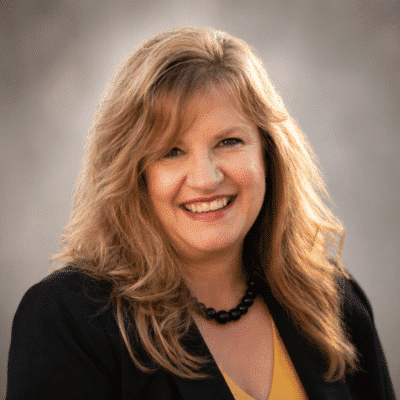
Christal is a senior at BYU–Idaho, graduating in July 2026 with a Bachelor’s degree in Marriage and Family Studies with an emphasis in parent education. She also holds an Associate’s degree in Family History Research, reflecting her strong commitment to family across generations. Christal is passionate about strengthening and preserving the family and is excited to support United Families International’s mission through her internship. She is a wife, mother of seven, and grandmother of nine, and finds her greatest joy in spending time with her family, gardening, traveling, and laughing.